
DSCR Loans in Idaho: The 2026 Complete Investor's Guide
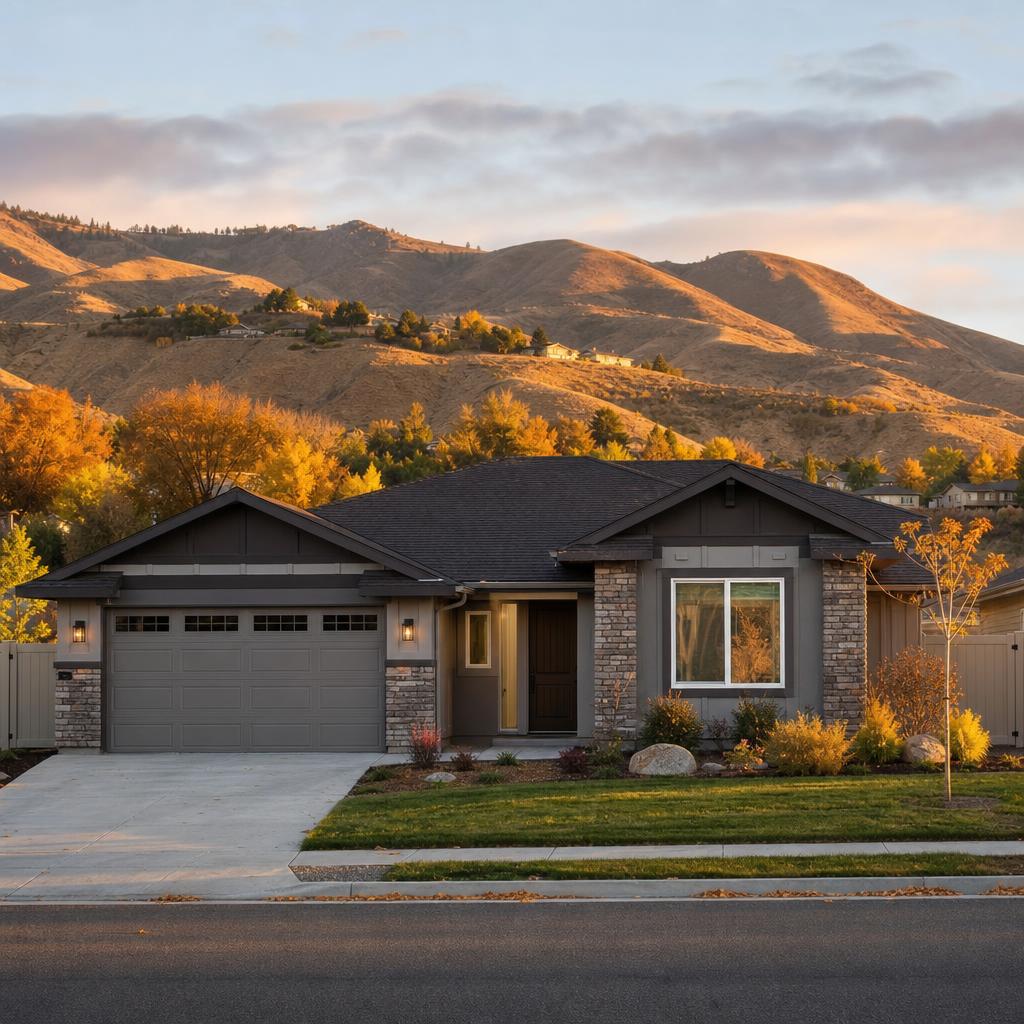
If you're investing in Idaho real estate in 2026—whether you're buying your first rental in Nampa or scaling a portfolio across the Treasure Valley—DSCR loans allow you to qualify based primarily on the rental property's income rather than your personal income.
But getting a DSCR loan isn't usually the difficult part.
The bigger question is how a particular lender will evaluate the property.
Rent calculations, seasoning requirements, property type, appraisal guidelines, leverage, and even whether the property is vacant can change the outcome from one lender to another.
This guide explains how DSCR loans work in Idaho, what investors typically need to qualify, how financing differs across Idaho markets, and where lender guidelines can have the biggest impact on the deal.
What Is a DSCR Loan and Why Does It Matter for Idaho Investors?
DSCR stands for Debt Service Coverage Ratio. It measures whether a property generates enough rental income to cover its own mortgage payment.
The basic formula is:
Monthly Qualifying Rent ÷ Monthly PITIA
Qualifying rent depends on the lender's guidelines — this may be the current lease, market rent from the appraisal, or another lender-approved method depending on the property type, occupancy, and program. See how qualifying rent is determined for Idaho DSCR loans for a full breakdown.
PITIA includes principal, interest, taxes, insurance, and HOA dues when applicable.
A 1.0 DSCR means the qualifying rent exactly covers the applicable monthly housing expense. A 1.25 DSCR means the property generates 25% more qualifying rental income than that expense.
Many standard DSCR programs are structured around a 1.0 DSCR or higher, although low-ratio and no-ratio programs are available through some lenders when the property falls below that threshold.
What makes DSCR loans different from conventional investment property loans:
- Qualification is based primarily on the property's income rather than the borrower's employment income.
- W2s, personal tax returns, and employment verification generally are not required.
- Traditional personal debt-to-income ratios generally are not used.
- Many DSCR programs allow investment properties to close directly in an LLC.
- Out-of-state investors can finance investment properties in Idaho.
For Idaho investors, location matters because the relationship between property values, market rents, taxes, insurance, and other housing expenses can produce very different DSCR results from one market to another.
Why DSCR Loan Performance Varies Across Idaho Markets
Idaho isn't one DSCR market.
Boise and Meridian generally have higher acquisition costs, which can create tighter debt service coverage ratios when rents don't rise at the same pace as property values.
Nampa, Caldwell, Idaho Falls, Twin Falls, and other secondary markets can offer a different relationship between acquisition price and rental income.
That difference matters because DSCR qualification ultimately comes back to the property's income compared with its monthly housing expense.
Property strategy matters too.
A traditional long-term rental, short-term rental, co-living property, BRRRR project, or rural investment property may produce completely different financing outcomes—even at similar property values.
That's why I don't evaluate an Idaho DSCR loan based on location alone.
The property, rental strategy, appraisal, loan structure, and lender guidelines all have to work together.
DSCR Loan Requirements in Idaho: What You Actually Need to Qualify
Requirements vary by lender and program. Here's what investors should understand when evaluating a DSCR loan in Idaho in 2026.
Use the DSCR Calculator to run the property's initial numbers before determining which loan structure makes sense.
Credit score: Requirements vary considerably by lender, leverage, property type, and DSCR ratio. Many standard programs begin around the low-to-mid 600s, while stronger credit profiles can improve available leverage and pricing.
DSCR ratio: A 1.0 DSCR is a common benchmark for standard programs, but it is not a universal minimum. Low-ratio and no-ratio DSCR programs are also available through certain lenders, typically with adjustments to leverage, pricing, or other loan terms.
Down payment and LTV: Available leverage depends on the lender, credit profile, DSCR ratio, property type, loan purpose, and other program requirements. Many purchase programs fall in the 75%–80% LTV range, while cash-out refinance limits can vary by lender and scenario.
Property types: DSCR financing is commonly available for single-family properties and 2–4 unit properties. Select lenders also offer programs for 5–8 unit properties, warrantable and non-warrantable condos, short-term rentals, rural properties, and other specialty investment properties.
Rent calculation: This is one of the areas where DSCR lenders differ significantly. Some lenders use the current lease, some allow market rent from the appraisal, and others use different calculations depending on occupancy and the loan program.
For short-term rentals, qualifying income may come from historical operating income, third-party market-rent data, or another lender-approved method.
The rent calculation can directly affect the DSCR ratio, maximum leverage, pricing, and whether the property qualifies at all.
LLC closing: Many DSCR programs allow investment properties to close directly in an LLC, making entity vesting a common option for real estate investors.
Seasoning: There is no universal seasoning requirement across DSCR lenders. Some programs allow investors to refinance shortly after acquisition or renovation and use a new appraised value, while others require a specific ownership period or calculate the allowable value differently.
For BRRRR and value-add investors, understanding the refinance guidelines before purchasing the property can be just as important as structuring the acquisition. Investors who want to think through lender selection, rent methodology, appraisal treatment, and refinance planning before committing to a property will find a practical framework in DSCR financing strategy in Idaho.
For a deeper look at how lender guidelines compare across these areas, see Idaho DSCR lenders.
Idaho Market by Market: Where DSCR Investors Are Finding Opportunities in 2026
Boise
Boise can be more challenging for DSCR investors because higher acquisition costs can put pressure on the relationship between rent and monthly debt service.
That does not mean Boise deals do not work. It means property selection and loan structure become more important.
Value-add properties, 2–4 unit properties, and investment strategies that improve rental income can create a different DSCR outcome than a standard turnkey rental.
That relationship — and where rental income improvement and appraised value diverge — is explained in income vs. appraised value for Idaho DSCR investors.
See the full breakdown of DSCR loans in Boise, including how rental income, property type, and lender guidelines can affect qualification.
Meridian
Meridian attracts a wide range of rental strategies, but higher property values can create tighter DSCR calculations for traditional long-term rentals.
That makes the rental strategy especially important.
Co-living, room-by-room rentals, and other higher-income rental models can produce very different numbers than a traditional single-tenant lease, but whether that income can be used depends on the lender's guidelines and how the property is documented.
See DSCR loans in Meridian for a deeper look at financing options and specialty rental strategies.
Nampa
When a Nampa property can be acquired at a lower basis than a comparable property elsewhere in the Treasure Valley while supporting sufficient qualifying rent, the resulting DSCR calculation may be stronger.
That doesn't automatically mean every Nampa property will qualify more easily.
Taxes, insurance, interest rate, HOA expenses, property type, rent calculation, and lender guidelines still determine the final DSCR.
See the full breakdown of DSCR loans in Nampa.
Idaho Falls
Idaho Falls gives investors a different financing profile than the Treasure Valley because acquisition prices and rents can produce different debt service coverage ratios.
It can also be an interesting market for BRRRR and value-add investors.
When a property is purchased below market value and improved, the refinance strategy becomes especially important.
Some DSCR lenders may allow an updated appraised value without the seasoning period investors often expect, while others impose ownership or value restrictions.
See DSCR loans in Idaho Falls for a deeper look at financing investment properties in Eastern Idaho.
Rural Idaho
Rural Idaho can present different DSCR opportunities because acquisition costs, rents, property characteristics, and available inventory vary significantly from the Treasure Valley.
Properties in Twin Falls, Pocatello, Burley, and smaller Idaho markets may fit DSCR programs, but rural underwriting can require additional attention to acreage, property use, marketability, appraisal comparables, and lender-specific guidelines.
Some DSCR lenders allow properties with acreage and other rural characteristics, while others place tighter limits on property type or land size.
For rural Idaho investments, lender selection becomes especially important before ordering the appraisal or committing to the financing structure.
See DSCR loans for rural Idaho properties for a deeper look at acreage, appraisal, and lender considerations.
DSCR Loan Rates in Idaho: What Determines Your Rate in 2026
There isn't one standard DSCR loan rate in Idaho.
Pricing can vary significantly between lenders because DSCR loans are influenced by the investor's credit profile, property cash flow, leverage, property type, loan purpose, prepayment penalty structure, and other program-specific factors.
Factors that can affect DSCR loan pricing include:
- Credit score: Stronger credit profiles generally improve pricing and available terms.
- DSCR ratio: Higher property cash flow can improve pricing with some lenders and programs.
- LTV: Lower leverage generally produces better pricing.
- Property type: Short-term rentals, non-warrantable condos, rural properties, and other specialty property types may receive different pricing depending on the lender.
- Prepayment penalty: Longer prepayment penalty structures can improve pricing compared with shorter or no-prepayment-penalty options.
A 30-year fixed loan with a prepayment penalty is a common DSCR structure, but the right prepayment period depends on the investor's expected hold period and exit strategy.
An investor planning to hold a property long term may prioritize pricing differently than someone expecting to refinance after renovations or sell within several years.
Interest-only options are also available through some DSCR programs and can be useful when maximizing short-term cash flow is more important than immediate principal reduction.
Specialty DSCR Programs Idaho Investors Are Actually Using
DSCR No-Seasoning Refinance Options in Idaho
Some DSCR lenders offer refinance programs that do not require the traditional six- or twelve-month ownership period investors often expect.
Depending on the program, an investor who purchases a property with cash or private money, completes renovations, and increases the property's value may be able to refinance using the updated appraised value without waiting months to begin the process.
Other lenders impose seasoning requirements or limit how quickly the new value can be recognized.
For BRRRR investors, this isn't simply an underwriting detail.
It can determine how quickly capital can be recovered and redeployed into another property.
The important question isn't simply whether DSCR loans require seasoning.
It's which lender's seasoning rules apply to the specific property and refinance strategy.
Learn more about DSCR no-seasoning cash-out refinance options for Idaho investors.
Short-Term Rental / Airbnb DSCR
Short-term rental properties can qualify for DSCR financing, but the method used to determine qualifying rent varies by lender.
Depending on the program, lenders may consider historical operating income, third-party short-term rental market data, projected income, or another approved method.
This matters because a property that does not qualify using long-term market rent may produce a very different DSCR when a lender allows short-term rental income.
See how Airbnb and short-term rental DSCR financing works for Idaho investors.
Co-Living and PadSplit DSCR
Co-living and room-by-room strategies may produce a different gross-income profile than a traditional single-tenant lease, but whether that income is eligible for DSCR qualification depends on the lender, program, and supporting documentation.
The underwriting question is whether the lender will recognize that income and what documentation is required to support it.
Some lenders may evaluate actual room-by-room leases or operating history, while others may rely on traditional market rent or place additional restrictions on the property.
Learn more about co-living and PadSplit DSCR financing or read the full guide to PadSplit DSCR loans in Idaho.
Sober Living and Care Home DSCR
Sober living and care home properties require more specialized underwriting than a traditional rental property.
Depending on the lender and program, qualifying income may be evaluated using leases, operating agreements, facility income, or other documentation.
Because these properties do not fit every DSCR lender's guidelines, the financing structure should be reviewed before assuming the property's operating income will qualify.
Learn more about sober living DSCR loans and care home DSCR financing for specialty residential facilities.
New Construction DSCR
Newly completed investment properties may qualify for DSCR financing without an established rental history.
Depending on the lender, qualifying income may be based on projected market rent from the appraisal or another approved rental-income method.
Seasoning, completion requirements, certificates of occupancy, and how the lender treats newly constructed property can vary by program.
DSCR for 5–8 Unit Properties
DSCR financing is also available through select lenders for small multifamily properties with five to eight units.
These loans may be structured differently from standard residential 1–4 unit DSCR programs, including differences in appraisal requirements, leverage, pricing, and underwriting.
The underlying concept remains similar: the property's income and debt service are central to determining whether the financing works.
What I See Working on Idaho DSCR Loans
Working directly with Idaho real estate investors, I see the same property produce very different financing outcomes depending on which lender evaluates it.
The difference is rarely just the interest rate.
One lender may require the current lease while another allows market rent from the appraisal.
One may require seasoning before recognizing a property's new value while another may offer a refinance strategy without the same waiting period.
A rural property, non-permitted ADU, short-term rental, or co-living property may fit one lender's guidelines and fall outside another's.
That's why I don't start an Idaho DSCR conversation by asking which lender has the lowest advertised rate.
I start with the property.
How is it being used?
What rent can be documented?
Is it vacant or occupied?
Has it recently been renovated?
Is the investor trying to maximize leverage, recover capital, improve cash flow, or preserve flexibility for the next acquisition?
Once those questions are answered, the lender becomes much easier to identify.
For Idaho investors, DSCR financing isn't simply about qualifying.
It's about matching the property and investment strategy to the lender whose guidelines support what the investor is actually trying to accomplish. For a deeper look at why the lowest rate isn't always the best structure — and how leverage, prepayment terms, and loan design affect the overall deal — see why the best DSCR loan isn't always the lowest rate.
How the DSCR Loan Process Works in Idaho
- Property Identification and Pre-Qualification — Run the numbers before you're under contract. DSCR ratios can often be estimated in advance using the expected loan payment and the rental income likely to be accepted under the applicable lender guidelines. This can help identify potential financing issues before an investor commits to the property.
- Application — DSCR loans generally do not require personal tax returns, W2s, or traditional employment-income documentation. Borrowers typically provide information related to the property, assets, credit profile, ownership entity, and transaction.
- Appraisal — The appraisal establishes the property's value and may also provide market rent through the appropriate rent schedule. How rental income is ultimately used for DSCR qualification depends on the property type and lender. Short-term rentals, co-living properties, ADUs, and other non-traditional rental strategies can require additional income analysis.
- Underwriting — The lender reviews the property, appraisal, rental income, credit profile, assets, entity documentation, and other program requirements. Personal employment income and traditional debt-to-income qualification generally aren't used the way they are with conventional investment property financing.
- Closing — Many DSCR loans can close directly in the investor's LLC when the lender's entity requirements are satisfied. The exact closing process and documentation requirements depend on the lender, property, transaction, and ownership structure.
Learn More About DSCR Loans in Idaho
A property that doesn't qualify with one DSCR lender isn't necessarily a property that can't be financed. See why DSCR loans get denied in Idaho — and what to do about it.
The issue may be how the rent was calculated, how the property was classified, the seasoning requirement, available leverage, or another lender-specific guideline.
That's why lender selection should come after understanding the property and the investor's strategy—not before.
I work with Idaho real estate investors to evaluate the property, rental income, appraisal considerations, leverage, seasoning requirements, and exit strategy before determining which DSCR lender and loan structure makes sense.
If you're evaluating an Idaho investment property, use the DSCR Calculator to run the initial numbers or apply to review the financing strategy.
Frequently Asked Questions
- What credit score do I need for a DSCR loan in Idaho?
- Credit score requirements vary by lender, leverage, property type, and DSCR ratio. Many standard programs begin in the low-to-mid 600s. Stronger credit profiles typically provide access to better pricing, leverage, or program options.
- Can I close a DSCR loan in my LLC in Idaho?
- Yes. Many DSCR programs allow investment properties to close directly in an LLC, making entity vesting a common option for real estate investors. Exact entity requirements vary by lender, including ownership structure, guarantor requirements, and documentation.
- Does the property need to be leased to qualify for a DSCR loan in Idaho?
- Not always. Many DSCR programs allow vacant properties to qualify using market rent established through the appraisal or another lender-approved method. How rental income is calculated and which programs allow vacant property qualification vary by lender.
- What is the minimum DSCR ratio required in Idaho?
- There is no single universal minimum. Many standard programs use a 1.0 DSCR as a benchmark, meaning the qualifying rental income covers the applicable monthly housing expense. Low-ratio and no-ratio programs are also available through certain lenders, usually with differences in pricing, leverage, or other loan terms.
- Can out-of-state investors get DSCR loans in Idaho?
- Yes. DSCR financing is available to out-of-state investors purchasing or refinancing investment properties in Idaho. Residency generally isn't what determines qualification. The property, rental income, credit profile, loan structure, and lender guidelines are more important.
- How is rent calculated for Airbnb properties in Idaho?
- Qualifying income for short-term rental properties varies by lender. Some programs may use third-party short-term rental market data, while others may consider historical operating income, projected income, or additional documentation. The method used can materially affect the property's DSCR ratio and available financing options.
- Can I use a DSCR loan for a property with multiple units in Idaho?
- Yes. One-to-four-unit residential investment properties are commonly eligible for DSCR financing. Five-to-eight-unit properties are also available through select lenders, although they may have different underwriting, appraisal, pricing, and leverage requirements.
- How long does a DSCR loan take to close in Idaho?
- Closing time depends on the lender, appraisal timeline, property type, documentation, and complexity of the transaction. A straightforward DSCR loan with a complete file can often move relatively quickly, while specialty properties, appraisal issues, entity documentation, or unusual income calculations can extend the process.
- What is the maximum LTV on a DSCR loan in Idaho?
- Maximum LTV varies by lender, loan purpose, property type, credit profile, DSCR ratio, and other program requirements. Many purchase programs offer leverage in the 75%–80% LTV range, while refinance and cash-out limits can differ depending on the specific lender and transaction.
- Do DSCR loans have prepayment penalties?
- Many DSCR programs offer prepayment penalty structures, and accepting a longer prepayment period can often improve pricing. Common structures include step-down penalties such as 3/2/1 or 5/4/3/2/1, although available options vary by lender, state, and loan program. Investors who expect to sell or refinance early may prefer a shorter prepayment period or no prepayment penalty, even if that results in different pricing.

About the Author
Patrick Penner
NMLS #376205 • Coast2Coast Mortgage • Licensed in 46 States
Patrick is an Idaho-based DSCR loan specialist who has helped investors across the Treasure Valley and 46 states finance rental properties without W-2s or tax returns. He structures every deal personally — no call centers, no handoffs.