
Idaho Multifamily Loans: How DSCR Financing Works for 2-4 Unit Properties
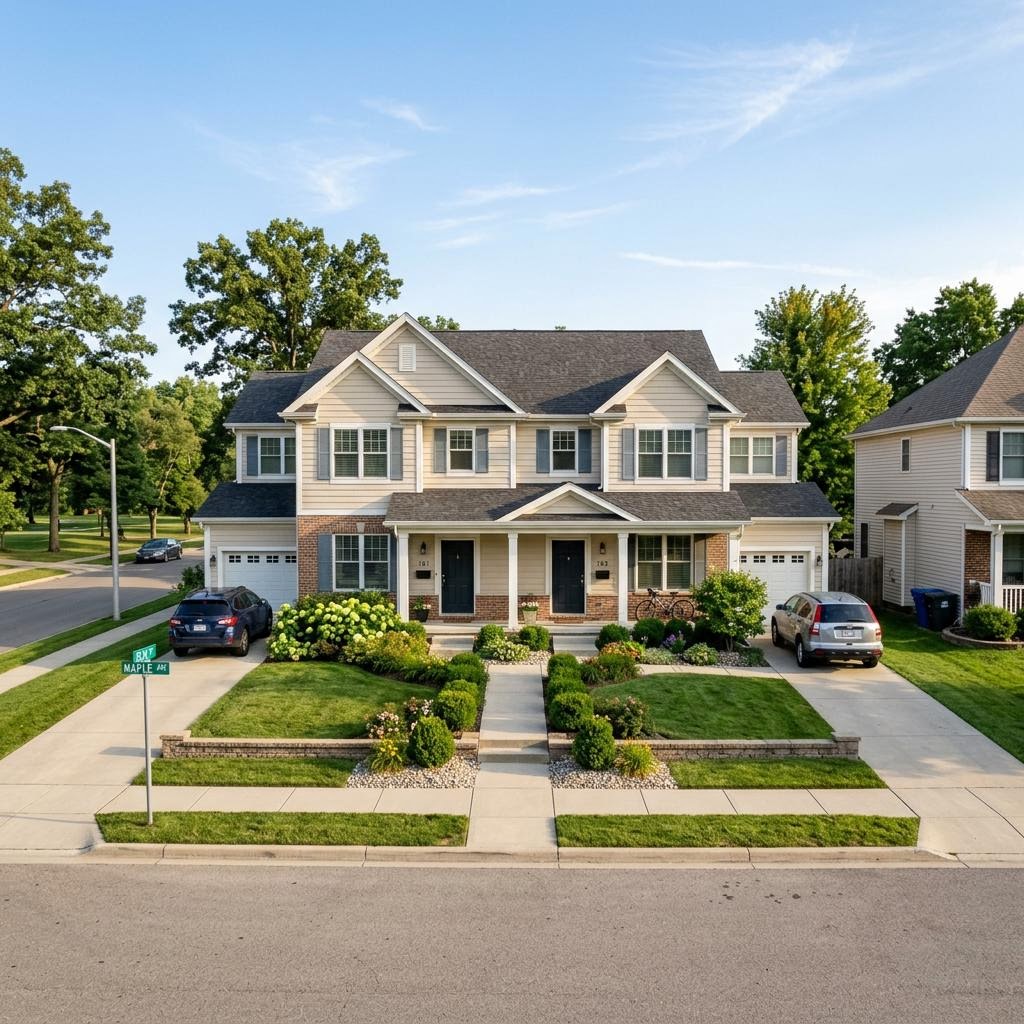
Duplexes, triplexes, and fourplexes can give Idaho real estate investors something a single-family rental cannot: multiple rental income streams under one property.
But more units don't automatically mean a stronger loan.
With DSCR financing, the important question is how the lender evaluates the combined rental income, monthly property expenses, occupancy, appraisal, and overall loan structure.
A fully occupied fourplex can be evaluated differently from a partially vacant property. One lender may use existing leases while another may allow market rent from the appraisal for certain units. A recently renovated multifamily property can also create different refinance options depending on the lender's seasoning and valuation guidelines.
That's why I look at 2–4 unit DSCR financing as more than simply adding the rents together.
The property and the lender guidelines have to work together.
How DSCR Loans Work for Idaho Duplexes, Triplexes, and Fourplexes
A DSCR loan qualifies an investment property primarily by comparing the property's qualifying rental income with the monthly housing expense used by the lender. For a broader overview of how DSCR financing works across Idaho markets, see the Idaho DSCR loan guide.
For a 2–4 unit property, income from the individual units is generally combined when calculating the property's DSCR.
The basic calculation is:
Total Qualifying Monthly Rent ÷ Monthly PITIA = DSCR Ratio
PITIA generally includes principal, interest, property taxes, insurance, and applicable association dues.
For example, consider a duplex where each unit produces $1,450 per month in qualifying rent:
$1,450 + $1,450 = $2,900 combined qualifying rent
If the applicable monthly PITIA is $2,750:
$2,900 ÷ $2,750 = 1.05 DSCR
That means the qualifying rental income is approximately 5% higher than the monthly housing expense used in the calculation.
But the math is only part of the underwriting.
The next question is which rent numbers the lender will actually allow you to use.
How Rental Income Is Calculated on a 2–4 Unit DSCR Loan
This is where lender selection starts to matter.
A duplex, triplex, or fourplex can have several different rental situations at the same time.
One unit might have a long-term tenant with an existing lease.
Another might be vacant.
Another could have a lease that is significantly below current market rent.
And a recently renovated property might have no rental history at all.
Different DSCR lenders can evaluate those situations differently.
Depending on the program, qualifying income may be based on existing leases, market rent supported by the appraisal, or another lender-approved calculation.
That means two lenders can look at the same fourplex and produce different DSCR ratios without anything about the property changing.
The difference is the underwriting guideline.
For an Idaho multifamily investor, I want to know how every unit is occupied and documented before deciding which lender makes sense.
Can a Duplex, Triplex, or Fourplex Be Vacant and Still Qualify?
Potentially, yes.
A DSCR property does not always need every unit occupied at closing.
Some lenders allow market rent from the appraisal to support qualifying income on vacant units. Other programs may have different occupancy, lease, or documentation requirements.
This becomes especially important when an investor is purchasing a value-add property.
A fourplex might have two occupied units, one vacant unit undergoing renovation, and another unit ready to lease.
The financing question isn't simply:
"Is the property occupied?"
It's:
"How will this lender calculate income from each unit?"
Understanding that before the appraisal and underwriting process can prevent an otherwise workable multifamily deal from being evaluated under the wrong guidelines.
Why the 2–4 Unit Classification Matters
Duplexes, triplexes, and fourplexes generally remain within residential 1–4 unit lending classifications.
Once a property reaches five units, financing typically moves into a different multifamily or commercial lending category.
That distinction can affect:
- Loan programs
- Appraisal requirements
- Maximum leverage
- Pricing
- Reserve requirements
- Underwriting
- How property income and expenses are analyzed
However, being classified as residential doesn't mean every DSCR lender treats a fourplex exactly like a single-family rental.
Some lenders adjust leverage, pricing, reserve requirements, or other guidelines as the number of units increases.
This is another reason I don't assume that a lender offering a strong DSCR program on a single-family property will automatically be the best choice for a fourplex.
DSCR Loan Requirements for Idaho 2–4 Unit Properties
There isn't one universal set of DSCR requirements for every duplex, triplex, or fourplex.
Guidelines vary by lender and program.
Here are the primary factors I look at when evaluating an Idaho multifamily DSCR loan:
Credit profile: Credit requirements vary by lender, leverage, property type, and DSCR ratio. Stronger credit can improve available pricing and leverage.
DSCR ratio: Many standard programs use a 1.0 DSCR as an important benchmark, but low-ratio and no-ratio options may be available through certain lenders.
Loan-to-value: Available leverage depends on the lender, number of units, credit profile, DSCR ratio, loan purpose, and other program requirements.
Rental income: The lender's treatment of leases, market rent, and vacant units can materially change the qualifying DSCR.
Reserves: Reserve requirements can vary based on the lender, property, number of units, borrower profile, and overall transaction.
Entity vesting: Many DSCR programs allow 2–4 unit investment properties to close directly in an LLC, subject to the lender's entity and guarantor requirements.
Experience: Some programs are available to first-time investors, while certain property types or loan structures may have additional experience requirements.
The important point is that these variables work together.
A lender offering higher leverage may have a different rent calculation. Another lender might offer better pricing but require stronger reserves. A third may be more flexible with a partially vacant property.
The best structure depends on the actual deal.
Idaho Markets for 2–4 Unit DSCR Financing
Multifamily financing can look different across Idaho because property values, rents, taxes, insurance, and available inventory vary by market.
Boise
Higher acquisition costs can make DSCR calculations tighter on Boise 2–4 unit properties, particularly when existing rents are below market.
That makes the rent analysis important.
If a duplex or fourplex has older leases, I want to understand whether the lender will be required to use those rents or whether another supported rent calculation may be available.
Value-add properties can also require more planning because the acquisition financing and eventual refinance may involve different lender guidelines.
Meridian
Meridian 2–4 unit properties can present a similar challenge: the property may be attractive operationally while the acquisition price puts pressure on the initial DSCR.
For investors considering alternative rental strategies or properties with different unit configurations, it's important to determine how the lender will view the property before assuming all projected income can be used.
Nampa
Nampa can provide a different relationship between acquisition price and rental income than higher-cost Treasure Valley markets.
That can make duplexes, triplexes, and fourplexes worth evaluating for investors focused on property cash flow.
But location alone doesn't determine qualification.
Taxes, insurance, interest rate, actual and market rents, property condition, occupancy, and lender guidelines still determine the final financing outcome.
See the full breakdown of DSCR loans in Nampa for additional information on financing investment properties in Canyon County.
Idaho Falls
Idaho Falls can also present opportunities for investors looking at 2–4 unit properties and value-add strategies.
For BRRRR investors in particular, the refinance guidelines can be just as important as the initial acquisition.
A renovated duplex or fourplex may have a significantly different value and rental profile after the work is completed. Whether an investor can immediately use that new value and how vacant units are treated depends on the DSCR lender selected for the refinance.
See the Idaho Falls DSCR guide for more on financing investment properties in Eastern Idaho.
Twin Falls and Other Idaho Markets
Smaller Idaho markets can also produce viable 2–4 unit DSCR opportunities.
However, properties outside larger metropolitan areas can require additional attention to appraisal comparables, marketability, property condition, and lender geographic guidelines.
A property having strong cash flow does not automatically mean every DSCR lender will finance it.
Example: How DSCR Works on an Idaho Duplex
Here's a simplified hypothetical example.
Purchase price: $420,000
Loan amount: $336,000
Unit 1 qualifying rent: $1,450/month
Unit 2 qualifying rent: $1,450/month
Combined qualifying rent: $2,900/month
Assume the applicable principal, interest, taxes, insurance, and other housing expenses total approximately $2,800 per month.
The DSCR calculation would be:
$2,900 ÷ $2,800 = 1.04 DSCR
The property produces slightly more qualifying rental income than the applicable monthly housing expense.
But here's what matters.
Change the qualifying rent to $1,350 per unit and the result changes.
Increase the interest rate and the result changes.
Change the leverage and the result changes.
Use market rent instead of an existing below-market lease and the result may change again if the lender allows it.
The property didn't change.
The financing inputs did.
That's why I don't look at a 2–4 unit property and decide whether it "works for DSCR" based only on the asking price and advertised rents.
I run the structure.
Hypothetical illustration only — not a representation of current available rates, rents, loan terms, property expenses, or typical Idaho duplex investment performance. Actual DSCR, payment, and qualifying rent depend on the specific property, program, rate environment, and lender requirements at time of application.
What I Look at Before Financing an Idaho Multifamily Property
When an investor brings me a duplex, triplex, or fourplex, I want to understand more than the purchase price.
I want to know:
- How many units are occupied?
- What does each unit currently rent for?
- Are the leases current or below market?
- Are any units vacant?
- Has the property recently been renovated?
- What market rent is likely to be supported by the appraisal?
- Is the investor buying or refinancing?
- If refinancing, when was the property acquired?
- How much capital has been invested into improvements?
- Is the goal maximum leverage, maximum cash flow, or recovering capital?
- How long does the investor expect to hold the property?
- Will the property close in an LLC?
Those answers tell me much more than simply knowing that the property is a fourplex.
They also help determine which lender guidelines are likely to support the investor's strategy.
What to Model Before Buying a 2–4 Unit Property in Idaho
Before making an offer on a duplex, triplex, or fourplex, run the numbers on the specific property — not a regional average or the asking price alone.
- Purchase price and loan amount. Confirm the expected leverage and resulting principal and interest payment at a realistic rate.
- Number of units and unit mix. A three-unit property with one studio and two two-bedrooms produces a different rent profile than three identical units.
- Eligible qualifying rent per unit. Confirm which rents the lender's program will allow — existing leases, appraiser-established market rent, or another permitted methodology. See: market rent vs. lease rent in DSCR underwriting.
- Combined qualifying rent. Total of all eligible unit rents under the applicable methodology.
- Vacancy and lease status per unit. Occupied, vacant, below-market lease, and recently renovated units can each receive different treatment depending on the lender and program.
- Taxes and insurance. Use property-specific figures. Regional averages can be meaningfully different from the actual expenses on a given property.
- HOA dues where applicable. Included in PITIA if present.
- Total PITIA. Principal + interest + taxes + insurance + applicable HOA.
- Resulting DSCR ratio. Combined qualifying rent ÷ PITIA. Confirm this against the lender's minimum requirement.
- Appraisal and value support. For value-add or recently renovated properties, confirm how the lender will treat the appraised value and whether an updated appraisal can be used for refinance purposes. See: how income and appraised value interact in DSCR financing.
- Reserve requirements post-closing. See: DSCR reserve requirements in Idaho.
- Lender and program eligibility. Confirm that the specific property type, condition, unit count, and vacancy status are eligible under the programs you're considering. See: how DSCR lenders evaluate the same property differently.
- Refinance or exit strategy. If a BRRRR or cash-out refinance is part of the plan, understand the lender's seasoning, valuation, and occupancy requirements before acquisition. See: DSCR BRRRR strategy in Idaho.
Use the DSCR Calculator to run the initial numbers on a specific property before committing to a price.
BRRRR and Cash-Out Refinance on Idaho 2–4 Unit Properties
Small multifamily properties can work particularly well with a BRRRR strategy because improvements can affect both property value and rental income.
But the refinance should be considered before the renovation is finished.
Some DSCR lenders offer programs that may allow an investor to refinance using an updated appraised value without the traditional seasoning period investors often expect.
Other lenders require ownership seasoning or calculate the eligible value differently.
Vacancy can matter too.
A newly renovated fourplex may be ready to rent but still have several vacant units when the investor wants to refinance.
Some lenders may allow appraisal-supported market rent for those units, while others may have different requirements.
That means a completed renovation does not automatically determine when the investor can recover capital.
The refinance guidelines do.
For an example of how this can work, see the Idaho DSCR no-seasoning cash-out refinance case study involving a vacant fourplex.
2–4 Unit DSCR Loans vs. Conventional Investment Property Financing
Both conventional and DSCR financing can work for small multifamily investment properties.
The better option depends on the investor and the deal.
Conventional investment property financing generally evaluates the borrower's personal income, debts, reserves, credit profile, and other traditional qualification requirements.
DSCR financing shifts more of the qualification toward the investment property's rental performance.
That can be useful for investors who:
- Own multiple financed properties
- Have complex tax returns
- Are self-employed
- Want to close in an LLC
- Want to preserve personal borrowing capacity
- Have difficulty qualifying under traditional debt-to-income calculations
But DSCR isn't automatically better.
The correct question is which financing structure supports both the property being purchased today and what the investor wants to do next.
How the Idaho Multifamily DSCR Loan Process Works
1. Analyze the Property
Start with the purchase price or estimated value, number of units, occupancy, existing rents, projected market rents, taxes, insurance, and expected loan structure.
2. Determine the Rent Method
Identify which rents are likely to be available for qualification based on the occupancy and lender guidelines.
This is especially important when units are vacant or existing leases are below market.
3. Select the Loan Structure
Compare leverage, pricing, reserves, prepayment penalty options, lender guidelines, and the investor's expected hold period.
4. Complete the Appraisal
The appraisal establishes property value and may provide market-rent information used in the DSCR analysis.
For 2–4 unit properties, the appraisal form and income analysis differ from a standard single-family rental and should accurately reflect the property's unit configuration.
5. Underwriting and Closing
The lender reviews the appraisal, rental income, credit profile, assets, entity documents, and other applicable program requirements.
Many DSCR loans can close directly in an LLC when the lender's entity requirements are satisfied.
Financing a Duplex, Triplex, or Fourplex in Idaho
A 2–4 unit property can look straightforward on paper.
Add the rents.
Calculate the payment.
Determine the DSCR.
But the underwriting becomes more interesting when one unit is vacant, another has a below-market lease, the property was recently renovated, or the investor wants to recover capital immediately after improving it.
That's where lender guidelines begin to matter.
I work with Idaho real estate investors to evaluate the rents, occupancy, appraisal, leverage, seasoning, entity structure, and exit strategy before determining which DSCR lender and loan structure fits the property.
If you're evaluating a duplex, triplex, or fourplex in Idaho, use the DSCR Calculator to run the initial numbers or contact me to review the financing structure before you commit to the deal.
Frequently Asked Questions
- Can I use a DSCR loan to buy a duplex in Idaho?
- Yes. Duplexes are commonly eligible for DSCR financing as 2-unit residential investment properties. Qualification depends on the property's rental income, expenses, borrower profile, and lender guidelines.
- Can I finance a triplex or fourplex with a DSCR loan?
- Yes. Triplexes and fourplexes are also commonly eligible for residential DSCR financing. Available leverage, pricing, reserves, and other requirements can vary by lender and number of units.
- Do all units need to be rented before closing?
- Not necessarily. Some DSCR lenders allow vacant units to qualify using appraisal-supported market rent, while others may have different occupancy or documentation requirements.
- How is DSCR calculated on a multifamily property?
- The lender generally combines the qualifying rental income from the property's units and compares it with the applicable monthly housing expense used in the DSCR calculation.
- What happens if one unit has a below-market lease?
- That depends on the lender. Some programs may rely on the existing lease, while others may allow appraisal-supported market rent or another calculation depending on the circumstances. This is one reason lender selection can materially affect the financing outcome.
- Can I close an Idaho duplex or fourplex in an LLC?
- Many DSCR lenders allow 2–4 unit investment properties to close directly in an LLC, subject to lender-specific entity, ownership, and guarantor requirements.
- Can I refinance a vacant fourplex with a DSCR loan?
- Potentially. Some lenders allow qualifying income to be supported by appraisal market rents even when units are vacant. Seasoning, valuation, leverage, and occupancy requirements vary by program.
- Can I use a DSCR loan for a 5-unit property?
- Five-unit properties generally fall outside standard residential 1–4 unit DSCR programs. Financing is available through lenders offering small multifamily or commercial DSCR programs, but the underwriting, appraisal, leverage, and pricing may differ.
- What credit score do I need for a 2–4 unit DSCR loan?
- There is no universal minimum across every lender. Credit requirements vary based on the lender, leverage, DSCR ratio, property, loan purpose, and other program factors.
- How much do I need to put down on an Idaho multifamily DSCR loan?
- Required equity varies by lender and transaction. Available LTV depends on factors including credit, DSCR ratio, number of units, loan purpose, property characteristics, and program guidelines.

About the Author
Patrick Penner
NMLS #376205 • Coast2Coast Mortgage • Licensed in 46 States
Patrick is an Idaho-based DSCR loan specialist who has helped investors across the Treasure Valley and 46 states finance rental properties without W-2s or tax returns. He structures every deal personally — no call centers, no handoffs.