
DSCR Investing in Idaho Falls, Idaho: What Rental Investors Need to Know in 2026
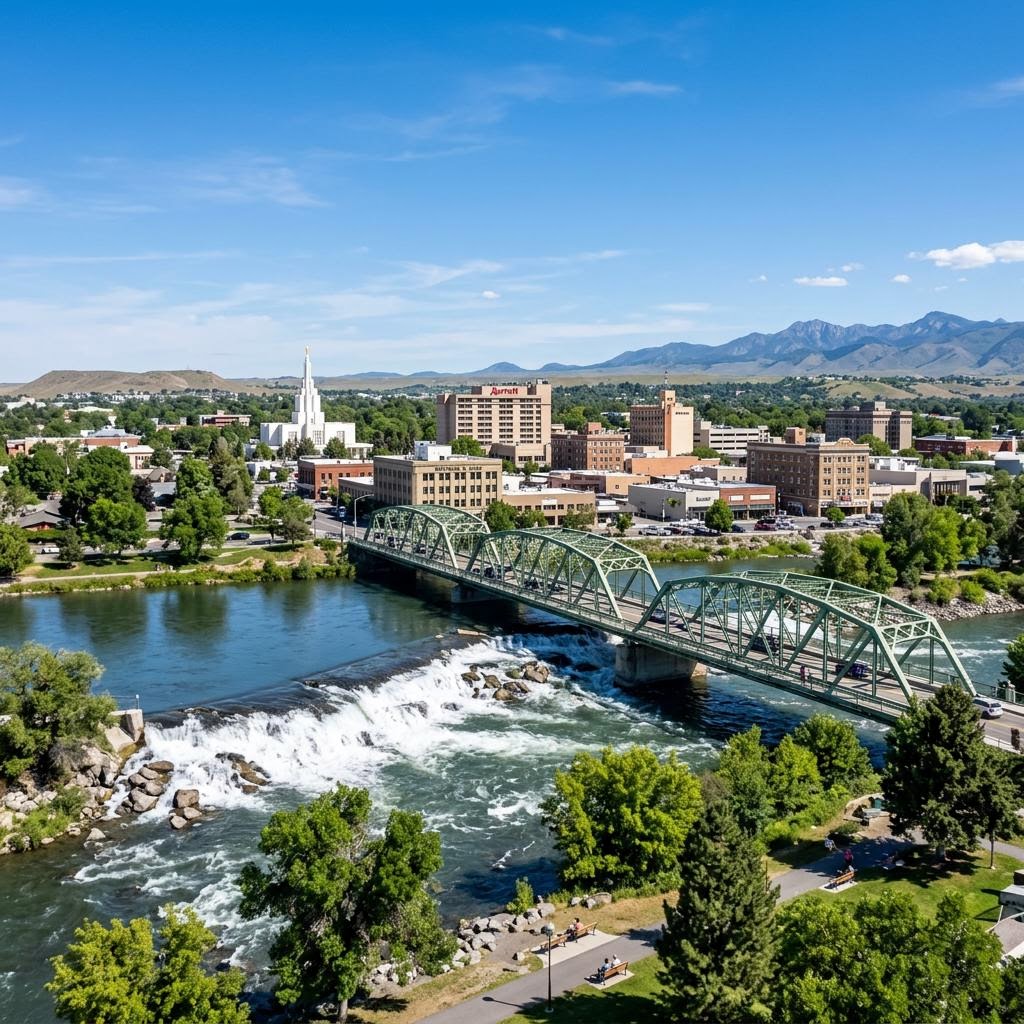
Eastern Idaho doesn't draw the same investor attention that Boise and Meridian do. When an Idaho Falls property can be acquired at a lower basis while supporting sufficient qualifying rent relative to PITIA, the resulting DSCR can be stronger than at a higher acquisition price elsewhere in the state. But geography alone does not guarantee cash flow, appraisal value, qualification, or leverage. Qualifying rent, lender program, property type, and appraisal methodology all determine the actual outcome.
For investors evaluating a DSCR loan in Idaho Falls, understanding how acquisition price, qualifying rent, and lender program interact is more useful than a city-level comparison.
Employment and Regional Institutions Investors Should Understand
Idaho National Laboratory (INL)
Idaho National Laboratory is a major Department of Energy research facility and a significant employer in Eastern Idaho. Its scientists, engineers, contractors, and other employees are part of the broader regional employment base. INL's presence supports the regional economy and contributes to Eastern Idaho's rental demand pool — but an Idaho Falls property's DSCR is determined by the property and its financing structure, not by the employer profile of its tenant.
BYU-Idaho (Rexburg — Separate Market)
BYU-Idaho is located in Rexburg, approximately 30 miles north of Idaho Falls. Rexburg and Idaho Falls are separate rental markets with their own appraisal comparables and qualifying-rent characteristics. BYU-Idaho's enrollment supports student rental demand in Rexburg — it is not a demand driver for Idaho Falls properties. Investors evaluating a Rexburg property should underwrite it as a distinct market. See: qualifying rent methodology in DSCR underwriting.
Eastern Idaho Regional Medical Center (EIRMC)
EIRMC is a major regional healthcare employer in Idaho Falls, drawing physicians, nurses, and medical professionals to the area. Healthcare is part of Idaho Falls' broader employment base alongside INL and other regional industries.
How the Acquisition Basis Affects the DSCR Equation
A simplified illustration shows how acquisition price interacts with DSCR:
- A $310,000 Idaho Falls single-family rental with 20% down produces a PITIA of roughly $2,100/month. At $2,200–$2,400/month in qualifying rent, the DSCR ratio is approximately 1.05–1.15.
- A $480,000+ property with the same down payment percentage produces a substantially higher monthly payment. At similar qualifying rent levels, the DSCR ratio may not reach the qualifying threshold.
This comparison is illustrative only. Whether either deal qualifies depends on the specific qualifying rent the lender's program permits for that property — not the gross market rent or the city where it's located. See: how appraisal value and acquisition price interact in DSCR financing.
What Can Change the DSCR Math Within Idaho Falls
Two Idaho Falls properties at similar price points can produce meaningfully different DSCR outcomes. The factors that drive the difference:
- Acquisition price. Lower basis improves the equation when qualifying rent holds — but rent doesn't automatically scale with price.
- Property type and unit count. Eligible 2–4 unit properties can produce a higher qualifying-income figure when multiple units are eligible under the lender's methodology. See: DSCR financing for Idaho 2–4 unit properties.
- Property condition. Affects appraisal, available comparables, and lender program access. Deferred maintenance or atypical property characteristics can limit eligible programs.
- Available rent comparables. Appraisers use submarket comparables to support a market rent conclusion. Areas with fewer comparable rentals can produce wider ranges or lower supported rents.
- Available sales comparables. Affect appraised value, which affects eligible LTV and loan amount — particularly relevant for value-add or multi-unit properties.
- Taxes and insurance. These vary across Eastern Idaho and directly affect PITIA. Model property-specific figures, not regional averages.
- Lender's qualifying-rent methodology. Eligible rent may be based on an executed lease, an appraiser-established market rent schedule, or another permitted methodology. The methodology affects the qualifying numerator. See: market rent vs. lease rent in DSCR underwriting.
- Appraisal treatment. For multi-unit or value-add properties, how the appraiser treats income and comparables affects both appraised value and supported rent.
- Rexburg as a distinct submarket. If you're evaluating Rexburg properties, underwrite them separately — Rexburg has its own comparables, qualifying rent characteristics, and lender-program considerations that differ from Idaho Falls.
Sample Deal: Idaho Falls Single-Family Rental
- Purchase price: $310,000
- Loan amount (20% down): $248,000
- Monthly P&I at 7.25%: ~$1,693
- Taxes + Insurance: ~$400/month
- Total PITIA: ~$2,093
- Qualifying rent (illustrative): ~$2,200–$2,400/month
- DSCR ratio: ~1.05–1.15
Illustrative example only — not a representation of current available rates, rents, loan terms, property expenses, or typical Idaho Falls investment performance. Actual DSCR, payment, and qualifying rent depend on the specific property, program, rate environment, and lender requirements at time of application.
What Idaho Falls Investors Should Model Before Making an Offer
A lower acquisition basis improves the DSCR equation only when qualifying rent is sufficient relative to PITIA — and when the appraisal, lender program, and property type all align. Before making an offer, investors should model:
- Acquisition price and eligible qualifying rent. Confirm what rent the lender's eligible methodology will support for the specific property and submarket.
- Full PITIA. Principal, interest, taxes, insurance, and any HOA. Model property-specific figures — regional averages can be misleading.
- Appraised value vs. purchase price. These don't always converge, particularly on value-add or multi-unit properties. See: how income and appraised value interact in DSCR financing.
- Qualifying-rent methodology. Confirm whether the program uses lease rent, appraiser-established market rent, or another method — and what documentation is required.
- Required reserves and liquidity. DSCR programs require reserve documentation after closing. See: DSCR reserve requirements in Idaho.
- Property type and unit count. 2–4 unit eligibility, occupancy status, and condition all affect lender program access. Confirm eligibility before committing.
- Intended exit or refinance strategy. If you plan to refinance after improvements or stabilization, model the expected DSCR at that point. For a real Eastern Idaho financing case study — a no-seasoning BRRRR refinance on a fourplex — see: how a no-seasoning DSCR cash-out refinance works in Idaho.
Use the DSCR calculator to model your specific scenario. See also: how to choose a DSCR lender in Idaho and common reasons DSCR loans are denied.
Working with an Idaho Falls DSCR Lender
While Patrick Penner is based in Meridian, he works with Eastern Idaho investors by phone, video, and email — and has financed properties in Idaho Falls, Pocatello, and the surrounding area. Every Idaho Falls DSCR deal is personally structured by Patrick, not a national call center.
If you're evaluating an Eastern Idaho investment property and want to understand whether the DSCR numbers work for your specific situation, get a free quote. See also: Idaho DSCR loan programs.
Frequently Asked Questions
- Are DSCR loans available for Idaho Falls investment properties?
- Yes. DSCR loans are available for Idaho Falls and Eastern Idaho investment properties. Standard programs generally qualify based on the property's rental income and cash flow rather than a conventional personal income calculation, subject to credit, reserves, property type, leverage, and lender/program overlays.
- Does Idaho Falls automatically produce better DSCR ratios than Boise or Meridian?
- Not automatically. When an Idaho Falls property can be acquired at a lower basis while supporting sufficient qualifying rent relative to PITIA, the resulting DSCR ratio can be stronger than at a higher acquisition price elsewhere. But qualifying rent, lender program, property type, appraisal methodology, and expenses all determine the actual outcome — geography alone doesn't guarantee a qualifying ratio.
- How do lenders determine qualifying rent on an Idaho Falls property?
- Qualifying rent methodology varies by lender and program. Eligible rent may be based on an executed lease, an appraiser-established market rent schedule, or another permitted methodology depending on the program and property type. The appraiser uses comparable rental properties within the relevant submarket to support a market rent conclusion. Idaho Falls and Rexburg are distinct submarkets with separate comparables.
- Does working near INL affect whether a rental qualifies for a DSCR loan?
- No. A tenant's employer does not directly determine DSCR qualification. Qualification is based on the property's eligible qualifying rent relative to PITIA, along with the lender's program requirements. INL is an important part of the Eastern Idaho employment base, but an Idaho Falls property's DSCR is determined by the property and financing structure — not by whether its tenant works at INL.
- Does BYU-Idaho rental demand affect Idaho Falls DSCR qualification?
- No. BYU-Idaho is located in Rexburg, approximately 30 miles north of Idaho Falls. Rexburg and Idaho Falls are separate rental markets with their own appraisal comparables and qualifying-rent characteristics. Investors evaluating a Rexburg property should therefore underwrite it as a distinct market rather than treating BYU-Idaho as a demand driver for an Idaho Falls property.
- Can duplexes, triplexes, and fourplexes qualify for DSCR financing in Idaho Falls?
- Yes, subject to lender program eligibility for the property type. Multi-unit properties can produce a higher qualifying-income figure when multiple units are eligible under the applicable methodology, which may improve the DSCR ratio. Program eligibility, qualifying rent per unit, vacancy and lease treatment, appraisal methodology, and property condition all affect the outcome.
- Can a vacant Idaho Falls rental qualify for a DSCR loan?
- Some DSCR programs permit qualifying rent to be supported by an appraiser-established market rent schedule for eligible vacant properties rather than an executed lease. Property eligibility, qualifying methodology, and documentation requirements vary by lender and program. Not all programs permit projected rent on a vacant property.
- What should I calculate before making an offer on an Idaho Falls investment property?
- Model the full PITIA (principal, interest, taxes, insurance, and any HOA), the qualifying rent methodology your lender will use, the resulting DSCR ratio, required reserves, and whether the appraised value supports the acquisition price. A lower acquisition basis improves the DSCR equation only when qualifying rent is sufficient relative to PITIA — and when the lender program, property type, and appraisal all align. Run the specific numbers before committing to a price.

About the Author
Patrick Penner
NMLS #376205 • Coast2Coast Mortgage • Licensed in 46 States
Patrick is an Idaho-based DSCR loan specialist who has helped investors across the Treasure Valley and 46 states finance rental properties without W-2s or tax returns. He structures every deal personally — no call centers, no handoffs.